

Check for understanding every few minutes, not every few weeks
Most schools check understanding every 6 to 10 weeks. Signal does it every 6 to 10 minutes, so you can act before a misunderstanding sets in.
Start for freeFix misconceptions before they become forgotten
Nurture Signal shows you what your class understands as you teach, so you can catch misconceptions in the moment.
Prepare hinge questions
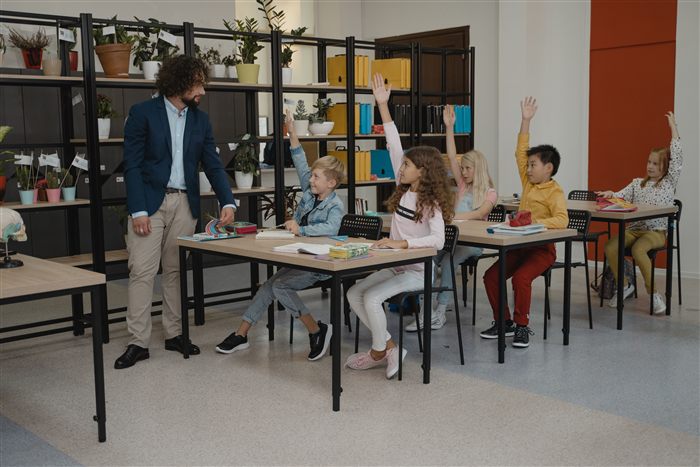
Write short diagnostic questions from your lesson content. A good hinge question is designed so each wrong answer points to a specific misconception, not just a wrong guess.
Release as you teach
At natural hinge points in your lesson, release a question to the class. Students choose answers and explain why they chose them. Get answers from everyone in seconds, not a few raised hands.
Get instant recommendations
Signal shows you a live picture of where your class actually is. You see what they understand, where the misconceptions sit, and a clear recommendation on whether to move on, recap, or reteach.
Clear guidance the moment you need it
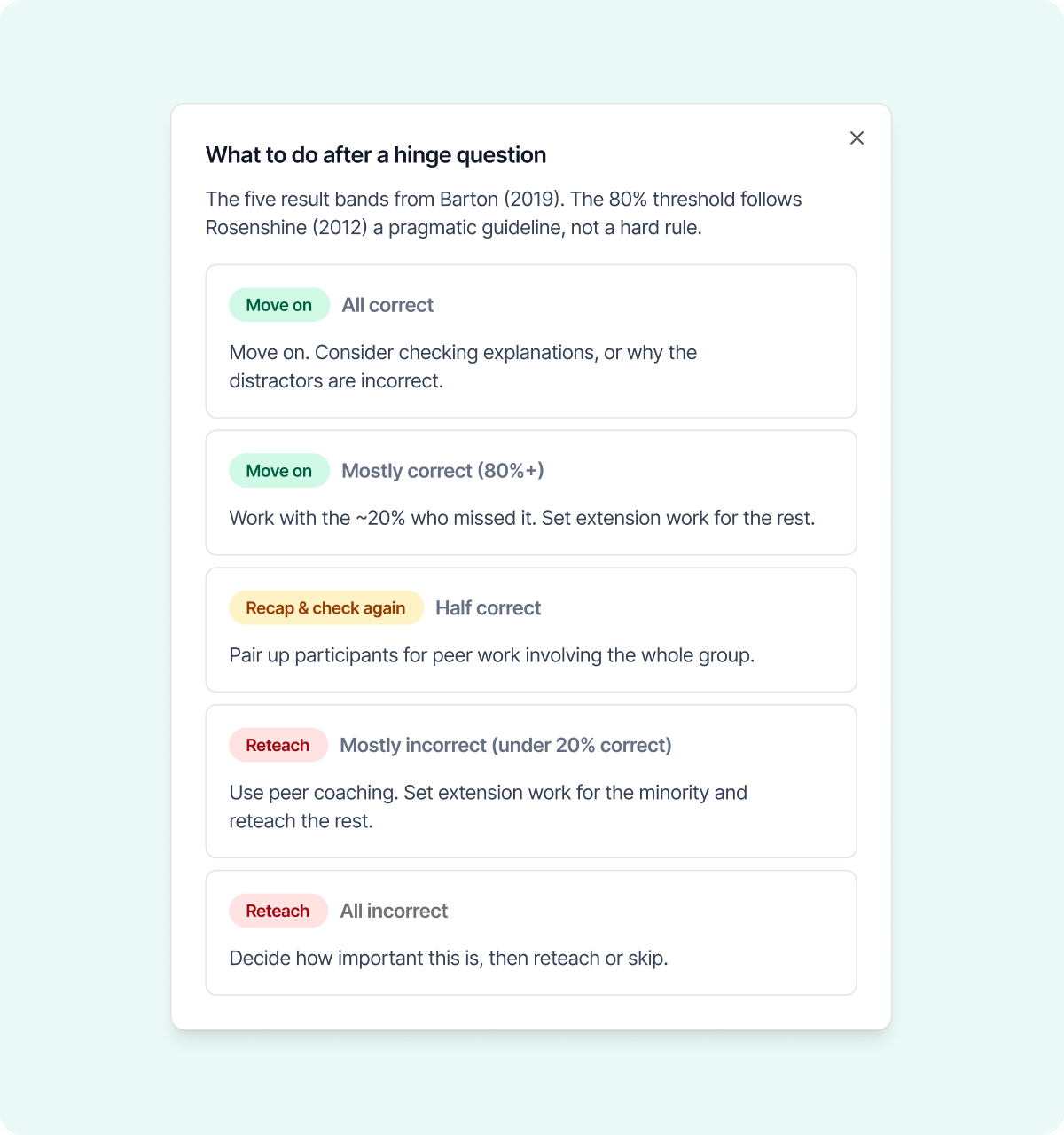
Every result maps to five response bands adapted from Barton (2019), each with a recommended next move. You get a clear steer on whether to move on, recap, or reteach, while the teaching decision stays yours.
Catch the false positives a poll would miss
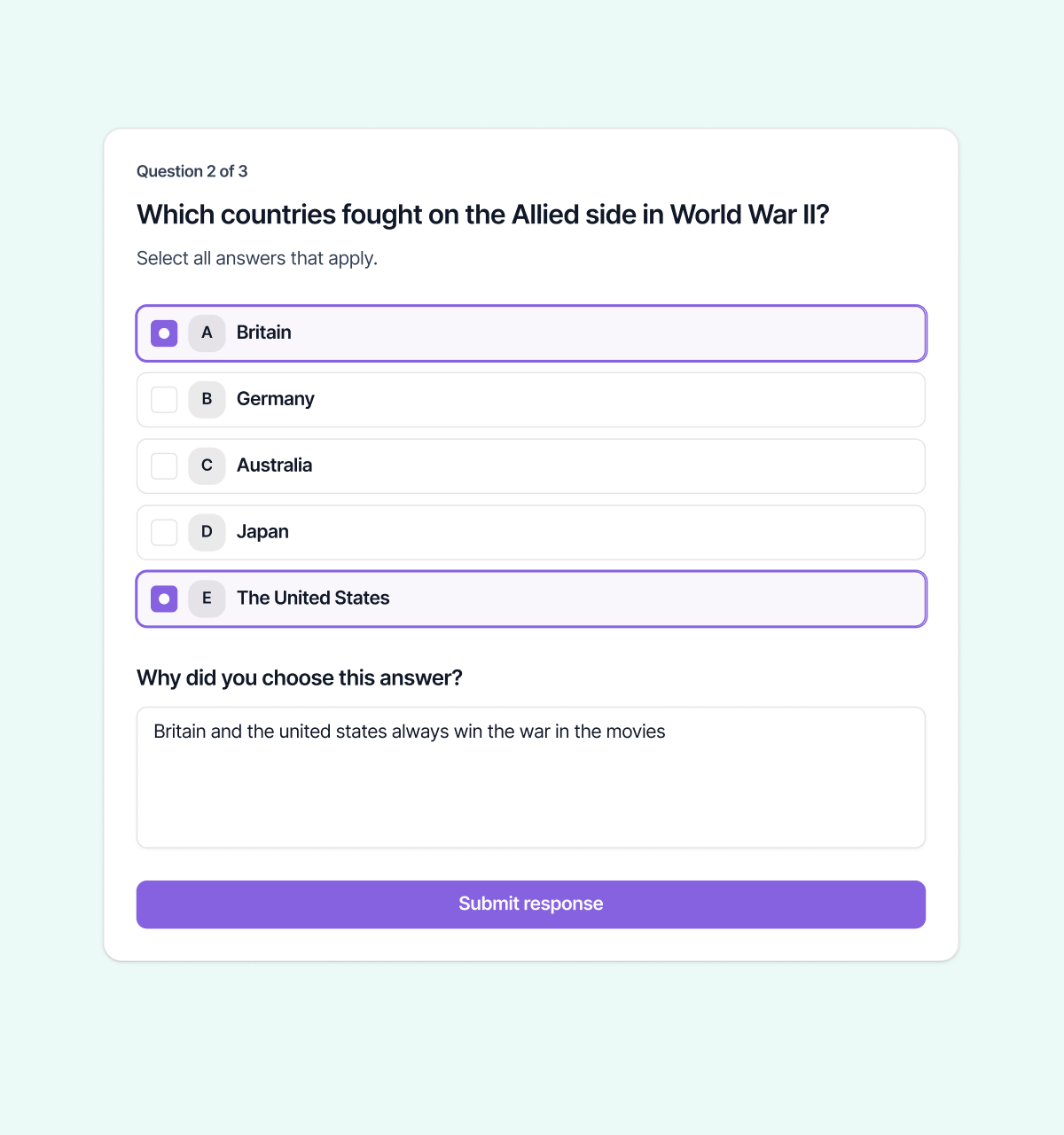
Signal asks every student why they chose their answer, not just what they chose. That surfaces the guesses and the faulty reasoning behind a correct answer, so you know your class actually understands rather than just clicked the right box.
Everything Nurture Signal brings to the classroom
Engagement Check-Ins
Students place themselves on Dr Amy Berry's Continuum of Engagement in seconds — from Disrupting through to Driving — and add a short reason why. It turns a framework teachers already trust into a lightweight, in-the-moment check that even the quietest students answer honestly.
How are you engaging right now?
Live · 28 responses
Mia · Driving
“I want to dig into whether this source is actually reliable.”

Aisha · Investing
“It's clicking now. I can see why the 1967 referendum mattered.”

Noah · Participating
“Following along and taking notes on the key dates.”

Ethan · Withdrawing
“I've lost track of the timeline, if I'm honest.”

Anonymous · Avoiding
“Not sure how to start the source analysis.”
Disposition Check-Ins
Beyond what students are doing, disposition check-ins surface how they feel about their learning — confidence, effort and readiness. Because responses can be private, students share what they might never say out loud, giving teachers an early read on who needs encouragement.
Which dispositions are you showing today?
Live · 24 responsesCheck for Understanding
Short diagnostic questions at the hinge points of a lesson show what the class actually understands — not just who is nodding along. Every student responds and explains their thinking, so teachers can catch misconceptions in the moment rather than weeks later.
What did the 1967 referendum change for Aboriginal and Torres Strait Islander peoples?
Class Insights
A live, class-level picture of engagement and understanding as the lesson unfolds. Patterns that paper reflections and a show of hands tend to miss become visible at a glance, so teachers can decide whether to move on, recap or reteach.
Here's how your engagement session went.
Active
28
214
36
Participant Insights
Session-level and individual insights let teachers follow how each student's engagement shifts over time. It makes it easy to notice the student who is quietly withdrawing and to celebrate the one moving towards driving their own learning.
Mia Thompson
Verified participant
Active Engagement
Based on this participant's reactions during the session.
12
4
2
Reactions over session
Each point is a reaction this participant sent during the session.

Frequently asked questions:
Is Nurture Signal just a polling tool?
No. Polls tell you what people clicked. Signal is built around checking for understanding, the practice set out by Dylan Wiliam, Barak Rosenshine, and Fisher and Frey. Diagnostic questions, an explanation from every student, and a recommended teaching decision are what separate it from a show of hands.
What is a hinge question?
A short question placed at a key point in your lesson, where the choice to move on or go back actually hinges on the answer. Each wrong option is designed to reveal a specific misconception, so the responses tell you what students are getting wrong, not only that they are wrong.
Does it feel like a test for students?
No. Signal is low stakes by design. It is not grading and it is not formal assessment. Responses are anonymous to other students and visible to you, so students can answer honestly and you can still follow up with the individuals who need it.
What do I need to prepare?
Your hinge questions. They take some thought to write well, but a strong diagnostic question stays useful for years and travels across classes, so the effort compounds.
What subjects does it work for?
Any subject where you can write a question with a clear answer and meaningful wrong answers. Maths is a natural starting point, but the approach applies across the curriculum.
How long does a check take?
Seconds for students to respond, and under a minute for you to read the whole class picture and decide what to do next.
Still have questions?
Contact usFind out what your class understands today, not in six weeks
Chat to us about how we can help you embed formative assessment and feedback in your school or organisation.